



Quick Summary: Equity release lets you borrow against a Dubai property you already own and take the difference as cash, while keeping the property and repaying monthly. Expats can borrow up to 80% of a home’s value under AED 5 million, or 60% on an investment property, minus what they still owe. Banks mainly approve the money for buying or renovating property. Get a valuation range and compare lenders before you apply.
If you bought in Dubai a few years ago, your property has probably grown in value while your outstanding mortgage balance has shrunk. The difference is your available equity. Equity release in Dubai lets property owners borrow against the value of their property without selling. You keep the title deed and the property, and you get a lump sum.
The problem is that every website quotes a different number. Some say 50%. Others say 85%. A few describe a UK product that doesn’t exist here. As an independent broker comparing 25+ UAE lenders, we see this confusion cost owners real money, either by asking for too much and getting declined or by settling for too little.
This guide gives you the actual rules, a worked AED example, the full fee list, and the reasons banks say no.
What Is Equity Release in Dubai, and How Is It Different From the UK Version?
Equity release in Dubai is a new mortgage on a property you already own. You get cash, keep the home, and repay it monthly like any mortgage.
The bank checks your property’s current market value, works out how much it will lend against it, settles any existing mortgage, and pays you the difference. The CBUAE defines equity simply as the appraised value of the property minus all claims against it. Your property stays in your name. The bank registers a mortgage on the title deed with the Dubai Land Department (DLD), exactly as it would on a purchase.
You may also hear it called a cash-out refinance, a mortgage top-up, or a loan against property (LAP). In Dubai, these are all versions of the same idea: a loan against the value accumulated in a property you own. Equity release in the UAE works the same way in every emirate, including Abu Dhabi and Sharjah, though this guide focuses on Dubai rules and DLD fees.
Why the UK definition doesn’t apply here
Search “equity release” and many results describe the British lifetime mortgage: borrowers over 55, no monthly payments, and the debt repaid from the estate. Some UAE websites repeat this. It’s wrong for the UAE market.
UAE banks don’t offer lifetime mortgages or home reversion plans. Equity release here is a standard mortgage with monthly repayments, a maximum term of 25 years, and the same affordability checks as a purchase loan. It’s not a retirement product either: you’ll still need to show income that covers the repayment.
If you’re new to how home loans work here, our UAE mortgage guide covers the basics.
Once you know what it is, the next question is the one everyone asks first: how much can you actually take out?
How Much Equity Can You Release From Your Dubai Property in 2026?

Expats can borrow up to 80% of a Dubai home’s value under AED 5M, or 60% on investment property, minus what they still owe.
The ceiling comes from CBUAE Circular 31/2013, the UAE Central Bank regulation that still governs every mortgage in the UAE. It caps the loan-to-value (LTV) ratio, which is the total loan divided by the bank’s valuation. That means LTV applies to the property’s value, not to your equity. Anyone promising “80% of your equity” is describing something that doesn’t exist.
| Borrower and property | Maximum LTV |
|---|---|
| UAE national, first home, value up to AED 5M | 85% |
| UAE national, first home, value above AED 5M | 75% |
| UAE national, second or investment property | 65% |
| Expat, first home, value up to AED 5M | 80% |
| Expat, first home, value above AED 5M | 70% |
| Expat, second or investment property | 60% |
| Off-plan property, all buyers | 50% |
Why websites quote anything from 50% to 85%
They’re mixing three different numbers. The CBUAE table above sets the legal maximum. Each bank then applies its own equity release policy, which is often lower than the regulatory cap. Non-residents sit outside the table altogether, so banks set their limits case by case.
The Central Bank’s LTV limits are ceilings, not entitlements. Your bank valuation, your income and the lender’s own equity release policy decide your final figure.
Worked example: a Dubai Marina apartment worth AED 2.4 million
Say you bought a two-bedroom apartment in Dubai Marina in 2019. The bank now values it at AED 2,400,000 and your existing mortgage balance is AED 700,000. Your equity is AED 1,700,000. Here’s how much of it you could release in three common scenarios:
| Scenario | LTV | Maximum new loan (AED) | Existing mortgage (AED) | Cash released before costs (AED) |
|---|---|---|---|---|
| Expat resident, it’s your home | 80% | 1,920,000 | 700,000 | 1,220,000 |
| Lender caps equity release at 70% | 70% | 1,680,000 | 700,000 | 980,000 |
| Expat resident, it’s an investment | 60% | 1,440,000 | 700,000 | 740,000 |
The same apartment’s released amount ranges from AED 740,000 to AED 1,220,000. Whether it’s your home or a rental is the biggest single factor, and a standard mortgage calculator won’t show it. That’s why the first thing we check is how the bank will classify your property, not just what it’s worth.
Example scenario: Say an expat owns a townhouse in Jumeirah Village Circle valued at AED 2,100,000, with AED 650,000 left on the mortgage. Reading that banks lend 80%, she expects about AED 1,030,000. If her bank’s equity release policy caps her at 70%, the real figure is AED 820,000. That AED 210,000 gap is why it pays to compare lenders before applying.
Equity release calculator: work out your own number in four steps
Free estimator
How much equity can you release?
Three quick steps. No sign-up, no email. Based on UAE Central Bank LTV limits.
Who owns the property?
How is the property used?
AED
AED
The amount owed can’t be higher than the property value.
Estimated cash you could release
AED 0
LTV applied–
Maximum new loan–
Estimated costs (about 2%)–
Monthly payment, 25 years–
Free, same-day reply from a RERA-licensed broker. We compare 25+ UAE lenders.
Indicative estimate only, not an offer of finance. Based on CBUAE mortgage LTV limits (Circular 31/2013); non-resident limits are set by each bank. Monthly payment uses an indicative rate from 3.75% (residents) or 4.24% (non-residents). Your final figure depends on the bank’s valuation, your income and the lender’s policy. City Axis Mortgage Broker L.L.C, RERA ORN 58708.
Prefer to work it out by hand? The estimator above uses this four-step formula:
- Estimate the current value of your property in Dubai. Use recent sales in your building, not listing prices.
- Multiply by your LTV from the table above (80% for an expat's home under AED 5M, 60% for investment property).
- Subtract your loan balance, using the settlement figure from your current lender.
- Subtract costs of roughly 2% of the new loan. What's left is your realistic cash figure.
If the result is close to what you need, the bank's valuation becomes the deciding number, so it's worth getting a broker's view on value before you apply for a loan.
Income caps the amount you can borrow too. The CBUAE limits an expat's total mortgage to 7 times annual income (8 times for UAE nationals). To borrow AED 1,920,000 as an expat, you'd need annual income of at least AED 274,286, or about AED 22,860 a month. You can compare current Dubai mortgage options against your own income before going further.
How you release it matters as much as how much. The route you take affects your costs, your rate, and how fast the money arrives.
How Do You Choose Between a Top-Up, Buyout, or Loan Against a Paid-Off Property?
There are three main types of equity release in Dubai. The right one depends on whether you still have a mortgage and whether your current bank is offering a competitive rate.
| Route | Who it suits | How it works | Cost difference |
|---|---|---|---|
| Loan against a paid-off property | Owners with no mortgage | New loan registered on a clean title deed | No early settlement or mortgage release fees |
| Top-up with your current bank | Owners happy with their bank and rate | Your existing lender increases the loan | Often fewer third-party fees, but no rate competition |
| Buyout plus equity release | Owners whose fixed rate is ending, or who want a better rate | A new bank settles the old loan and lends additional funds | Early settlement fee and DLD release fees apply |
A paid-off property is the cleanest case. There's no loan to settle, so you skip the early settlement fee and the mortgage release fees entirely.
A buyout with equity release does two jobs in one transaction: you switch to a lender with a better rate and take cash out at the same time. It's often the best option when your fixed period is ending, because the exit cost on your current loan is usually lower at that point.
Our equity release and buyout service explains how we structure these end to end.
Can you release equity with Islamic home finance?
Yes. Islamic banks offer Sharia-compliant versions, usually structured as Ijara (lease-to-own) or a Murabaha-based refinance. ADIB, for example, publishes an equity release calculator for its customers. You pay a profit rate instead of interest, and the CBUAE LTV limits are the same. Our Sharia-compliant home finance page compares the main structures.
What if your income is rental, not salary?
Some banks offer facilities assessed on the rent a property produces rather than on your salary. This can help retirees, landlords and non-residents whose main UAE income is rent. Expect the bank to ask for the Ejari registration, the tenancy contract and proof the rent is actually being paid.
Whichever route you choose, the bank will also care about what you do with the cash. The next section explains why.
What Can You Use Equity Release Money For Under UAE Bank Rules?
UAE banks mainly approve released equity for buying another property or renovating one. Other purposes need specific lender approval.
This surprises a lot of owners. The CBUAE mortgage regulations define a mortgage loan as a loan secured on residential property for constructing, purchasing or renovating a home, whether you live in it or rent it out. A retail mortgage is built around those purposes.
In practice, before a bank will release funds in the UAE, it asks what the equity release funds are for and wants proof:
- Buying a new property: the MOU (Form F) or sale agreement for the purchase
- Home renovation: a contractor's quotation or proforma invoice
- Other purposes such as business capital, education or debt consolidation: possible with some lenders, but policies vary widely and some banks decline them
So the common claim that equity release cash "can be used for anything" isn't safe advice. The lender decides whether your stated purpose fits its mortgage policy, and the wrong purpose on the wrong bank's file is a fast route to a decline.
If you want to release equity from a property to fund a business, a facility in your company's name may fit better than a personal mortgage. If the property itself is an office or shop, our commercial finance service covers loans against commercial property.
Example scenario: A family in Arabian Ranches owns a villa worth far more than they paid for it. Releasing AED 1,100,000 could cover the deposit and fees on a second home in Dubai Hills, so they keep the home they live in and add an investment property without selling anything. If you're still choosing where to buy next, our guide to the best areas to buy property in Dubai compares the main communities.
Once the purpose is clear, the next thing to check is what the transaction will cost you.
How Much Does Equity Release Cost in Dubai? A Full AED Fee Breakdown

Expect total costs of up to 2% to 3% of the new loan in Dubai. No 4% DLD transfer fee applies, since ownership stays with you.
The 4% Dubai Land Department fee only applies when a property is sold and transferred to a new owner. Equity release changes the mortgage, not the owner, so the DLD treats it like other mortgage transactions and you pay registration fees instead. On a AED 2.4 million property, that's AED 96,000 you don't spend compared with selling and buying again.
| Cost | Amount | When it applies |
|---|---|---|
| DLD mortgage registration | 0.25% of the new loan | Always |
| DLD title deed issuance | AED 250 | Always |
| DLD knowledge and innovation fees | AED 10 each | Always |
| Registration trustee service fee | AED 4,000 + VAT | Always |
| Property valuation | About AED 2,500 to 3,500 | Always (some banks refund it) |
| Bank processing fee | Up to 1% of the loan + VAT | Varies by bank, sometimes waived |
| Early settlement fee | Up to 1% of the outstanding loan, max AED 10,000 | Only when leaving an existing lender |
| DLD mortgage release | AED 1,290 + AED 315 registrar fee | Only when an existing mortgage is released |
| Life and home insurance | Monthly premiums | Usually required by the lender |
The registration figures come from the DLD mortgage registration service, and the release fees from the DLD procedure for releasing a mortgage. The early settlement cap of 1% or AED 10,000, whichever is less, is set in the CBUAE fee rules for home loans.
Worked example: the Dubai Marina apartment
Using the earlier example, here's a buyout with equity release that takes the loan to AED 1,920,000:
| Item | Cost (AED) |
|---|---|
| Early settlement fee (1% of AED 700,000) | 7,000 |
| DLD mortgage release (1,290 + 315) | 1,605 |
| Valuation | 3,000 |
| New mortgage registration (0.25% of AED 1,920,000) | 4,800 |
| Title deed, knowledge and innovation fees | 270 |
| Trustee service fee (AED 4,000 + 5% VAT) | 4,200 |
| Bank processing fee (1% + 5% VAT) | 20,160 |
| Total | 41,035 |
That's about 2.1% of the new loan, or 3.4% of the AED 1,220,000 released. If the bank waives its processing fee, which some do on buyouts, the total drops to around AED 21,000. Always ask for an all-in cost sheet before you sign the offer letter.
Costs only matter if the bank says yes. Here's what lenders check, and the reasons they turn people down.
Can You Qualify for Equity Release in Dubai, and Why Do Banks Decline Applications?
Most banks want AED 10,000+ monthly income, a clean AECB record, and a new payment that keeps your debts under 50% of income.
Your total monthly debt payments, including the new mortgage, credit cards and car loans, can't exceed 50% of your gross income under the CBUAE debt burden ratio (DBR) rule. Banks also stress-test the loan at a higher rate to check you could still pay if rates rose.
| Profile | What banks usually look for |
|---|---|
| Salaried resident | AED 10,000+ a month (some loan against property products start at AED 15,000), at least 6 months with your current employer |
| Self-employed resident | At least 1 year trading, trade licence and MOA, company and personal bank statements, audited accounts if available |
| Non-resident | Fewer lenders, income proven from your home country, lower LTV than residents |
| UAE national | Highest LTV limits, and pensioners can apply with some banks |
Emirates NBD's loan against property for expatriates, for example, asks for a minimum salary of AED 15,000 and finances up to 80% of the property value over up to 25 years. Most banks also want the loan repaid by age 65 if you're salaried, or around 70 if you're self-employed, which can shorten your term.
Seven reasons equity release applications get declined
- The valuation comes in low. The CBUAE requires an independent valuation, and the bank lends on that figure, not on listing prices or what your neighbour sold for.
- Your DBR is already too high. Credit card limits count even if you never use them. Banks typically treat 5% of each card limit as a monthly commitment.
- Your employer isn't on the bank's approved list. Banks rate employers. An unlisted company can mean a lower LTV or a straight no from that lender, even though another bank may accept it.
- The purpose doesn't fit. Asking a retail mortgage lender for business working capital is a common mismatch.
- It's an investment property and the numbers are tight. CBUAE rules require banks to deduct at least two months' rent from rental income when testing affordability, to allow for vacancy.
- The property isn't eligible. Not every bank will offer an equity release on every property type. Off-plan units, title deed issues or buildings a lender won't accept can stop the file. Equity release generally needs a completed, handed-over property. Ownership type matters too, as our guide to freehold vs leasehold in Dubai explains.
- Your credit report shows problems. Late payments and bounced cheques appear on your AECB credit report, and banks pull it on every application. Our guide to the AECB credit score and your mortgage explains how to check and improve yours.
A decline at one bank isn't a decline everywhere. Lenders differ on employer lists, property types and accepted purposes. That's the main reason we compare 25+ lenders before anything is submitted, so your file goes to a bank whose policy fits it the first time.
Example scenario: A self-employed consultant's trade licence is only 14 months old and his monthly income swings widely. A bank that looks only at recent months may decline him, while a lender that averages 12 months of company bank statements may approve the same file. That's the kind of difference a broker checks before any application goes in.
For the full criteria, read our guide to UAE mortgage eligibility in 2026.
If you meet the criteria, the process itself is predictable. Here's what happens, in order.
How Does the Equity Release Process Work in Dubai, Step by Step?
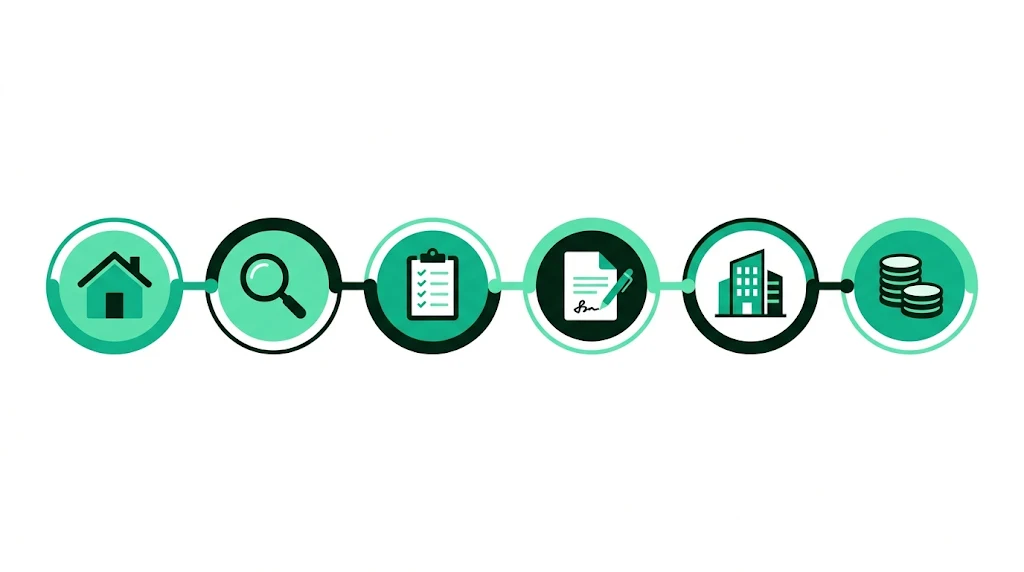
A typical resident equity release takes about four to six weeks from first conversation to funds released. A complete document pack is the biggest factor in how fast it moves.
| Step | What happens | Typical time |
|---|---|---|
| 1. Free assessment | We review your property value, balance, income and purpose, then shortlist suitable banks | Same day |
| 2. Pre-approval | The bank checks your income, liabilities and AECB report | Same day to a few days |
| 3. Valuation | The bank's valuer inspects the property and issues a report | 4 to 5 days |
| 4. Final offer letter | The bank confirms the loan amount, rate, fees and mortgage terms | 1 to 2 weeks |
| 5. Settlement and registration | At the trustee office, any old mortgage is released and the new one registered | 1 to 2 days |
| 6. Funds released | The bank pays out the released equity | Within a few working days |
Documents required for equity release in Dubai
- Passport, UAE residence visa and Emirates ID (non-residents: passport and national ID)
- Title deed of the property
- Latest statement from your current mortgage lender, if you have one
- Salary certificate dated within 30 days, or trade licence and MOA if self-employed
- Last 6 months of personal bank statements, plus company statements if self-employed
- Payslips if your pay varies
- A recent utility bill as proof of address
- Purpose evidence: a contractor's quote, or the MOU for a new purchase
- Ejari and tenancy contract if rental income is being counted
The steps mirror a purchase mortgage closely. Our walkthrough of how a UAE mortgage works explains each stage, from pre-approval to registration, in more detail.
Is Equity Release Smarter Than Selling or Taking a Personal Loan in Dubai?
The benefits of equity release are clear when you need a large sum and want cash from your property without selling it. It isn't always the right call, though. Here's how it compares with the other ways to raise cash from a property.
| Option | Typical cost | Keep the property? | Best for |
|---|---|---|---|
| Equity release | Mortgage rates from approximately 3.75% for residents, plus fees of up to 2% to 3% | Yes | Large sums for a property purchase or renovation |
| Selling | Agent commission of around 2%, plus a 4% DLD fee if you buy again later | No | Leaving the market or downsizing |
| Personal loan | Higher rates, a maximum of 48 months, capped at 20 times your salary | Yes | Small, short-term needs |
| Developer payment plan | Often interest-free, but tied to one project | Yes | Buying off-plan without a large deposit |
The personal loan limits come from the CBUAE rules on personal loans, which cap them at 20 times your monthly salary and 48 months. For a large sum, equity release is usually far cheaper per year and spreads repayments over a much longer term.
The risks to weigh before you release equity
- Rates can rise after the fixed period. Most UAE mortgages fix for 1 to 5 years, then move to EIBOR plus a bank margin. Three-month EIBOR was about 4.36% at the 10 November 2026 fixing, and it moves with US interest rates because the dirham is pegged to the dollar.
- You're turning property wealth into debt. You're borrowing more against one asset, and if the property market falls, your equity shrinks, and refinancing later gets harder.
- Your future borrowing drops. The new payment counts towards your DBR, which can limit your next purchase. If you plan to buy again, model both loans together first.
Our view after 20+ years in mortgage markets, first in Canada and now in Dubai: equity release works best when the money has a clear job, such as a deposit on a second property to grow your property portfolio, or a renovation that adds value. Using it to fund spending without a plan to repay is where owners get into trouble.
Example scenario: A couple who bought in Dubai Marina years ago now want a villa. Selling the apartment could cost around AED 50,000 in agent commission, plus a fresh 4% DLD fee on the next purchase. Releasing equity instead lets them keep the Marina apartment as a rental, with the rent helping to cover its new mortgage payment.
Frequently Asked Questions About Equity Release in Dubai
Can non-residents release equity from Dubai property?
Yes, non-residents can release equity from UAE property, but fewer banks offer it and LTV limits are usually lower than for residents. Lenders verify income from your home country, often using six months of bank statements and a credit report from your country of residence. Expect a more detailed document check and a longer timeline. Our guide to getting a Dubai mortgage from the UK shows how overseas applications work in practice.
Can I release equity from an off-plan property in Dubai?
Generally not until handover. Banks need a completed property with a title deed to value it and register the mortgage, and CBUAE rules cap off-plan lending at 50% LTV. Once the property is handed over and the title deed is issued, you can apply. Our off-plan mortgage guide covers financing before handover.
Is money from equity release taxed in the UAE?
No. The UAE doesn't charge personal income tax, and a loan isn't income anyway, so released equity isn't taxed locally. If you're tax resident in another country, check with a tax adviser there, especially if you plan to move the money abroad.
Can I release equity on a jointly owned property?
Yes. Every owner on the title deed must agree, because the mortgage is registered against the whole property. Banks usually require each owner to sign, and often to join the loan as a co-borrower.
How long does equity release take in Dubai?
Most resident cases take four to six weeks. Pre-approval is quick, the valuation takes about four to five days, and the final offer letter one to two weeks. Settlement and registration at the trustee office then take a day or two.
Ready to Get Your Free UAE Mortgage Assessment?
Equity release in Dubai comes down to three numbers: the bank's valuation, the LTV that applies to your property, and what you still owe. Get those right, choose the route that fits (a top-up, a buyout or a loan against a paid-off home), and match your purpose to a lender that accepts it.
Skip any of those steps and you risk a lower offer or a decline. If your property has grown in value, you may have more usable equity than you think, and the right lender can make a six-figure difference to how much of it you can use.
WhatsApp CityMortgage now at +971 56 130 56 56 for a free, same-day eligibility assessment. We compare 25+ UAE lenders and find the right mortgage for your profile, with full transparency and zero obligation.
