


Quick Summary: Freehold property in Dubai means permanent ownership of the property and the land it sits on. Leasehold property means you own the right to use the property for a fixed term, usually up to 99 years, while the land stays with the freeholder. Both freehold and leasehold property can be mortgaged in Dubai, but banks treat leasehold property differently: financing depends heavily on how many years remain on the lease. Check your eligibility before you sign an MOU, not after.
Dubai has more than 60 designated freehold areas where foreigners can buy freehold property outright, but plenty of buyers still confuse a freehold property with a leasehold property until they apply for a mortgage. The difference between freehold and leasehold isn’t just paperwork.
It changes what loan-to-value (LTV) a bank will offer on the property, how long the bank will lend for, and in some cases whether a lender will finance that property at all.
Every mortgage in the UAE falls under the Central Bank’s lending rules, but a leasehold property adds a layer banks assess separately: how many years are left on the lease. If you’re comparing a freehold property in Dubai Marina against a leasehold property in an older, more affordable area of Dubai, the financing math behind each property works differently.
This guide breaks down what freehold and leasehold actually mean in Dubai, which areas offer freehold property, and how the ownership type of a property affects your ability to finance the purchase.
What’s the Real Difference Between Freehold and Leasehold Property in Dubai?
A freehold property means you own the property and the land forever. A leasehold property means you own usage rights to that property for a fixed term, often 99 years.
Under Dubai’s Law No. 7 of 2006, both freehold property and leasehold property are real property rights registered with the Dubai Land Department (DLD). A freehold title deed grants permanent, transferable, inheritable freehold ownership of the property with no expiry.
A leasehold registration grants the right to occupy and use a property for a set period, commonly 10 to 99 years, while the underlying land beneath that property stays with the freehold owner of record. Two related but narrower property rights also exist in the UAE: usufruct, which grants use rights over a property without ownership, and musataha, which allows building on land you don’t own.
| Attribute | Freehold Property | Leasehold Property |
|---|---|---|
| Land ownership | Owned outright with the property | Owned by the freeholder |
| Duration | Permanent | Fixed term, up to 99 years |
| Title | Freehold title deed | Registered leasehold right |
| Inheritance | Passes to heirs indefinitely | Passes to heirs for remaining term only |
| Typical buyer | Long-term property owners | Shorter hold or lower entry price |
Knowing the legal difference between freehold property and leasehold property matters, but the more practical question for most buyers is which areas of Dubai actually let you buy freehold property as a foreigner.
Can You Buy Freehold Property in Any Area of Dubai?
No. Freehold property ownership for non-UAE nationals is restricted to designated freehold areas, not every area of the city.
| Emirate | Freehold Areas | Leasehold-Only Areas |
|---|---|---|
| Dubai | Dubai Marina, Downtown Dubai, Palm Jumeirah, Business Bay, JLT, JVC, Dubai Hills Estate | Deira, Bur Dubai, Al Karama, older Jumeirah, Al Warqaa |
| Abu Dhabi | Al Reem Island, Yas Island, Saadiyat Island, Al Raha Beach | Most other areas remain leasehold for non-UAE nationals |
| Sharjah | Limited freehold, GCC nationals only | Non-GCC buyers limited to leasehold, up to 100 years |
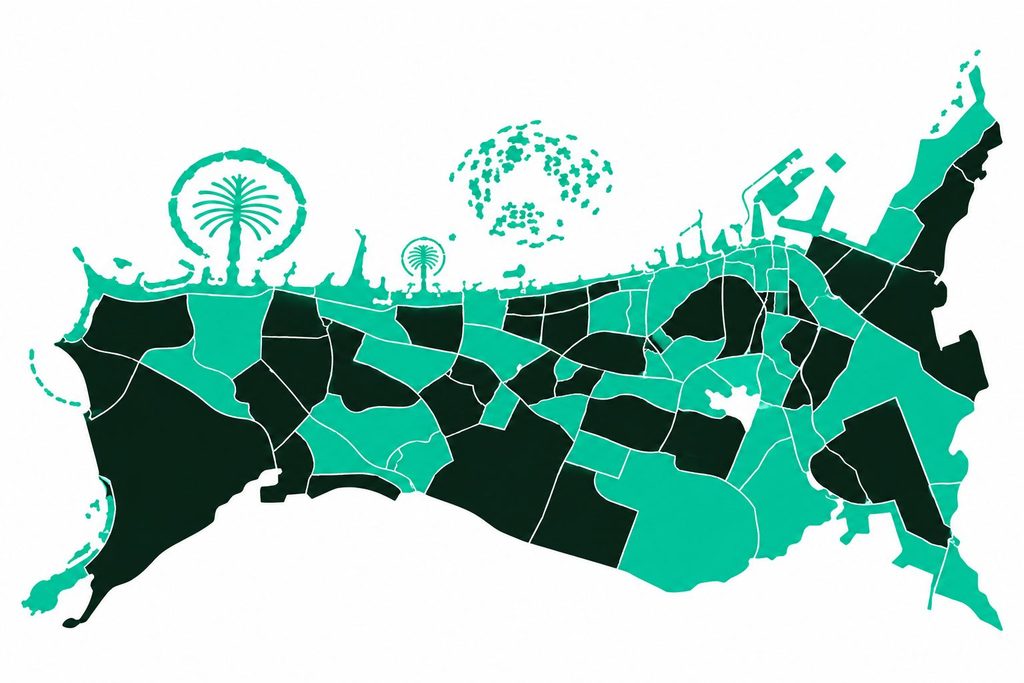
Dubai’s list covers 60+ freehold areas in total, including Dubai Marina, Downtown Dubai, and other popular areas across the city. Abu Dhabi’s freehold areas carry a lower transfer fee of 2% of the purchase price, against Dubai’s 4%.
Sharjah currently has no real freehold path for non-GCC buyers, which is why most international investors buying property focus on freehold areas in Dubai and Abu Dhabi instead. Investors who buy properties in these designated areas gain full title to both the unit and the land beneath it.
Can You Get a Mortgage on a Leasehold Property in Dubai?

Yes, UAE banks finance leasehold property, but the remaining lease term usually must exceed your mortgage term by 10 to 15 years.
This buffer exists because the bank’s security is tied to the lease on that property. A leasehold property with 60 years remaining on its lease comfortably supports a 25-year mortgage. A leasehold property with only 30 years remaining will likely cap your mortgage at around 15 years, if a lender agrees to finance that property at all, since the risk profile changes as the lease shortens.
We regularly see clients get excited about a lower listing price on a leasehold property in an older Dubai area, only to find out during pre-approval that several banks either decline to finance that leasehold property entirely or cap it at a much lower LTV with a shorter tenor tied to the remaining lease term. One buyer nearly lost his deposit timeline waiting to discover this after signing an MOU. A call to us beforehand would have flagged it in minutes.
As an independent broker comparing 25+ UAE lenders, we can usually tell within a same-day assessment which banks will finance a specific leasehold property in Dubai and at what terms, instead of you finding out lender by lender.
Once you know whether the lease term works for financing, the next question is how much of the property’s value a bank will actually lend against.
How Does Ownership Type Affect Your LTV and Mortgage Term?
Your property ownership type, freehold or leasehold, doesn’t just affect price. It affects how a bank values the property as security.
| Buyer Type | LTV | Notes |
|---|---|---|
| UAE Nationals | 85% | Highest LTV available on the property |
| Expats, first purchase ≤AED 5M | 80% | Standard resident rate |
| Residents, second purchase | 75% | |
| Off-plan property | 60% | Applies regardless of ownership type |
| Non-residents | 60–65% | Max tenor 25 years, max age 65 (salaried), min balance AED 45,000 |
These figures reflect City Mortgage’s typical achievable LTV across our panel of 25+ banks for property in Dubai. All UAE mortgages, on freehold property or leasehold property, sit under the Central Bank’s Debt Burden Ratio (DBR) cap, meaning your total monthly debt repayments, including the new mortgage, can’t exceed 50% of your gross monthly income.
Leasehold doesn’t change this cap, but a short remaining lease term on the property can push your effective LTV lower in practice, since the bank is pricing in more exit risk. If you want to see exactly where you’d land, check your mortgage eligibility before making an offer on a property.
Are DLD Fees Different for Freehold and Leasehold Property?
Freehold transfer fees run 4% of the sale price of the property. Leasehold transfer fees run 4% of the total rental value stated in the lease for that property.
That’s the main structural difference. Mortgage registration costs the same either way on any property: 0.25% of the loan amount plus roughly AED 290 in administrative fees (title deed, knowledge fee, innovation fee). A trustee office fee of AED 4,200 applies to transactions above AED 500,000.
One detail worth knowing before you budget for a property purchase: since February 2025, a CBUAE directive bars banks from financing the 4% DLD transfer fee or the 2% brokerage commission. Both now have to be paid in cash upfront, on top of your deposit on the property.
Fees are one thing, but many leasehold buyers really want to know what happens to their property once the lease term runs out.
What Happens When a Leasehold Term Expires in Dubai?
When a leasehold term ends, the right to that property reverts to the freehold owner unless the lease is renewed and re-registered with DLD.
Renewal is possible where the original lease agreement allows for it, but it isn’t automatic for the property. It requires a fresh DLD registration and a new fee payment, so banks factor that uncertainty into how they price and structure leasehold mortgages.
This also clears up a common misunderstanding: leasehold owners can pass the property to heirs, but only for whatever term remains on the lease at the time. The right to that property doesn’t extend or reset for the next generation.
What Are the Common Myths About Freehold and Leasehold Mortgages?
| Myth | Reality |
|---|---|
| Non-residents can’t get a UAE mortgage | False. Non-residents can get financing up to 60–65% LTV on a property through our lender panel |
| Leasehold property can’t be mortgaged at all | False. Banks finance leasehold property, but remaining lease term drives approval and LTV |
| The 4% DLD fee is negotiable | False. It’s fixed by regulation on every property; only the buyer/seller split is technically flexible |
| Leasehold rights can’t pass to heirs | False. Leasehold owners can pass the property to heirs, but only for whatever term remains on the lease |
| EIBOR stays fixed for the life of the mortgage | False. The benchmark rate is variable; “fixed” mortgages are only fixed for the first 1–5 years, then revert to variable |
The single biggest mistake we see is buyers signing an MOU on a leasehold property before checking with a lender whether the remaining lease term actually supports the mortgage they need on that property.
Should You Choose Freehold or Leasehold Property in Dubai?
Choose freehold property for long-term holds and maximum bank appetite. Leasehold property can work if 70+ years remain on the lease and the price gap makes it worthwhile.
Dubai’s real estate market gives buyers both options, and neither freehold property nor leasehold property is automatically the better investment in Dubai. It depends on your hold period and how you plan to use the property.
Freehold property suits you if:
- You plan to hold the property for 10+ years
- You want the widest choice of lenders and highest achievable LTV on the property
- Inheritance and resale flexibility on the property matter to you
Leasehold property may work if:
- The remaining lease term on the property is 70+ years (financing behaves close to freehold)
- Your investment horizon is shorter, 5 to 10 years
- The lower entry price outweighs the renewal uncertainty
Before you make an offer on either type of property:
- Confirm the exact ownership type and remaining lease term with the seller or agent
- Get a free eligibility check to confirm which banks will lend on the property, and at what LTV
- Add DLD fees and registration costs into your total budget before signing an MOU
- Ask about Islamic (Sharia-compliant) financing if that’s your preference; it’s available on both ownership types
If you’re still weighing the numbers on a specific property, the FAQ below covers the exact scenarios buyers ask us about most.
Frequently Asked Questions
Can foreigners buy freehold property in Dubai?
Yes. Non-UAE nationals can buy freehold property in more than 60 designated areas, including Dubai Marina, Downtown Dubai, and Palm Jumeirah. Outside these areas, foreigners are limited to leasehold property.
What minimum lease term do banks require for a leasehold mortgage?
Most UAE banks want the remaining lease on the property to run at least 10 to 15 years longer than your mortgage term. A 25-year mortgage typically needs well over 35 years left on the lease, though this varies by lender and property.
Are DLD fees different for freehold and leasehold property?
The transfer fee is still 4% of the property’s value, but it’s calculated on the sale price for freehold property and on the total rental value for leasehold property. Mortgage registration fees are the same for both.
Can non-residents get a mortgage in Dubai?
Yes. Non-residents can typically get 60–65% LTV on a property through our panel of 25+ lenders, with a maximum 25-year term and a minimum balance requirement of AED 45,000.
Can leasehold property be converted to freehold?
There’s no standard conversion process for a leasehold property. It would require direct negotiation with the freehold owner and DLD approval, and it’s rarely done in practice.
Does owning freehold property help with a UAE Golden Visa?
Yes. Freehold property valued at AED 2 million or more can qualify a buyer for the UAE Golden Visa, a route not typically available through leasehold property.
Freehold vs Leasehold Property in Dubai: The Bottom Line
Freehold property and leasehold property both have a place in Dubai’s real estate market, and both can be mortgaged. What changes is the paperwork banks want to see on the property and how far your money stretches.
If you’re eyeing a leasehold property because the price is right, get the remaining lease term checked against your target mortgage term before you commit to that property. If you’re going freehold, the wider lender pool for freehold property usually means better rates and a smoother process on your purchase.
Either way, ownership type is one of the first things any mortgage broker should confirm about a property before running the numbers.
Ready to Get Your Free UAE Mortgage Assessment?
Whether you’re comparing freehold property and leasehold property or already know which one you want, financing works best when you check eligibility on the property first.
WhatsApp City Mortgage now at +971 54 206 5454 for a free, same-day eligibility assessment. We compare 25+ UAE lenders and find the right mortgage for your property, with full transparency and zero obligation.
