

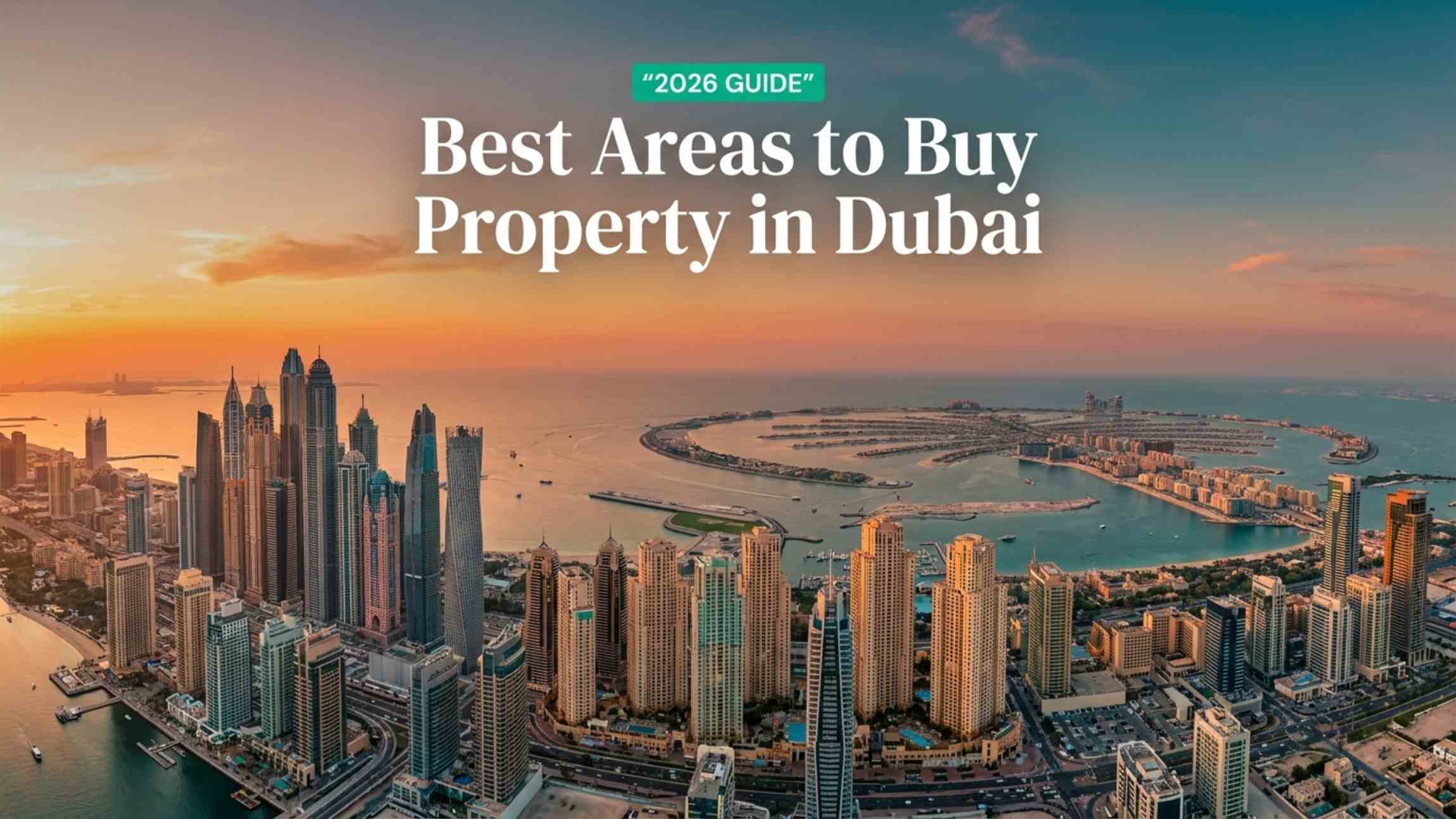

Quick Summary: Dubai’s best area to buy depends on your goal. JVC and Business Bay lead on rental yield (7.5-9%). Palm Jumeirah and Downtown Dubai lead on capital growth (12-18% YoY). Dubai Hills Estate and Arabian Ranches suit families. But your mortgage eligibility changes the math: non-residents face 60-65% LTV, and off-plan purchases cap at 60% LTV regardless of residency status. This guide breaks down each area by yield, growth, and what you can actually finance.
Dubai’s Land Department recorded around 38,000 residential transactions worth AED 110.4 billion in Q2 2026 alone, and off-plan sales made up roughly 63-74% of that volume. That tells you Dubai’s property market is still moving fast. It does not tell you where you should buy.
Every “best areas” list online ranks neighborhoods the same way: by price growth or Instagram appeal. Almost none of them ask the question that actually decides your outcome, which is what can you finance, and at what loan-to-value ratio. A non-resident investor and a UAE national salaried employee looking at the same AED 1.5 million JVC apartment face completely different down payment requirements, and that changes whether the area is realistically “best” for them.
This guide ranks Dubai’s top areas by three separate goals: rental yield, capital appreciation, and family lifestyle, then shows how your mortgage eligibility narrows or widens your real options. For the full picture on financing any of these areas, our Dubai mortgage guide breaks down eligibility, rates, and the application process end to end.
What Are the Best Areas in Dubai for Each Buyer Goal?
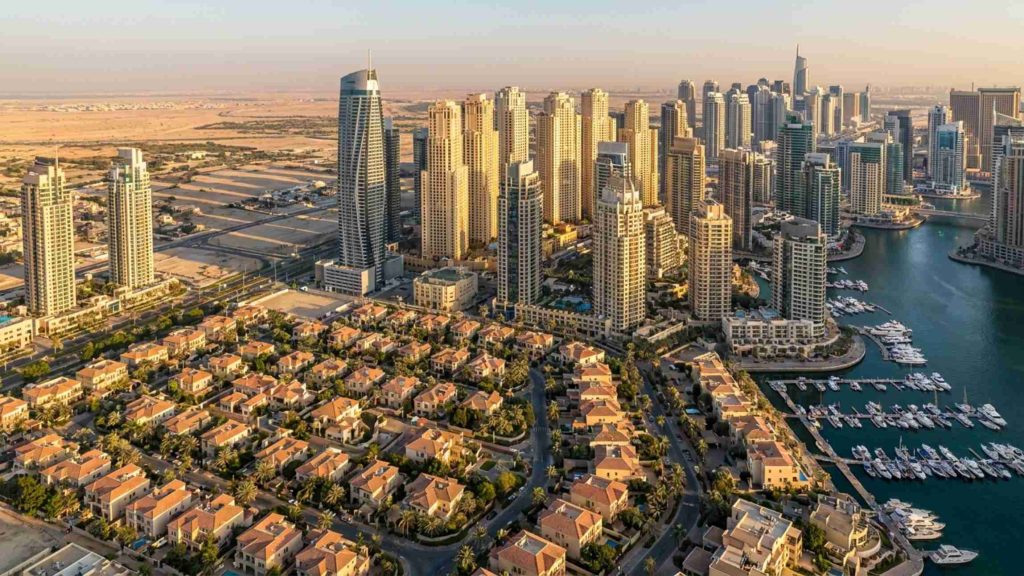
JVC and Business Bay lead on rental yield at 7.5-9%. Palm Jumeirah and Downtown Dubai lead on capital growth at 12-18% year over year. Dubai Hills Estate and Arabian Ranches suit families who want schools and villas.
Here’s the quick comparison before we go section by section:
| Area | Best For | Gross Rental Yields | Price Trend (YoY) | Entry Price Range (per sq ft) |
|---|---|---|---|---|
| JVC | Rental yields | 7.5-9.0% | +8-10% | AED 1,350-1,500 |
| Business Bay | Yield + corporate demand | 6.5-7.0% | +10-12% | AED 1,780-2,050 |
| Damac Hills 2 | Budget villas, entry ROI | 6.5-8.0% | +8-9% | AED 900-1,200 (villas) |
| Palm Jumeirah | Capital growth | 4.0-5.5% | +15-18% | AED 2,600-5,500 |
| Downtown Dubai | Capital growth | 5.0-6.0% | +12-14% | AED 2,850-3,450 |
| Dubai Hills Estate | Family + growth | 5.5-6.0% | +12-13% | AED 1,800-2,432 |
| Dubai Marina | Balanced | 5.5-6.5% | +7-8% | AED 1,950-2,285 |
| Arabian Ranches | Family villas | Not primarily rental-focused | +9-10% | AED 1,680-2,417 (villas) |
The area with the highest rental yield is rarely the same area with the highest capital growth. Decide which one matters more to your goal before you compare prices.
If you’re weighing rental income against long-term price growth, the next section breaks down exactly which areas outperform on cash flow.
What Should You Consider Before Choosing an Area to Buy In?
Four questions decide your realistic shortlist, and most buyers only think through one or two of them before falling for a neighborhood.
1. What’s your budget bracket? Entry-level buyers (under AED 1.5 million) are effectively limited to JVC, Arjan, Dubai South, and parts of Business Bay. Premium buyers (AED 3 million plus) open up Downtown, Dubai Hills, and Marina. Ultra-luxury (AED 10 million plus) is Palm Jumeirah territory.
2. Are you an investor or an end-user? Investors optimize for yield or exit value. End-users optimize for commute, schools, and daily life. These pull toward different areas almost every time.
3. Can you actually finance this area? This is the question competitors skip. A 65% LTV cap for non-residents means a non-resident buyer needs 35% cash upfront on any property, in any area. Off-plan properties cap at 60% LTV for everyone, resident or not, because of construction risk. That single rule can rule out an off-plan Dubai South unit for a buyer who assumed they’d only need 20% down.
4. What’s your timeline? Ready properties in Marina or JVC generate rental income immediately. Off-plan units in Dubai South or Creek Harbour won’t produce a single dirham of rent until handover, sometimes 2-3 years out.
At CityMortgage, we regularly see clients who fall in love with a Palm Jumeirah listing before checking their non-resident LTV eligibility, then have to restart their search once they realize the 35% down payment changes their entire budget. We run the eligibility check first, before you fall for a property, so this doesn’t happen to you.
Once your budget and eligibility are clear, the next question is simple: yield or growth?
Which Areas Offer the Best Rental Yield in Dubai?
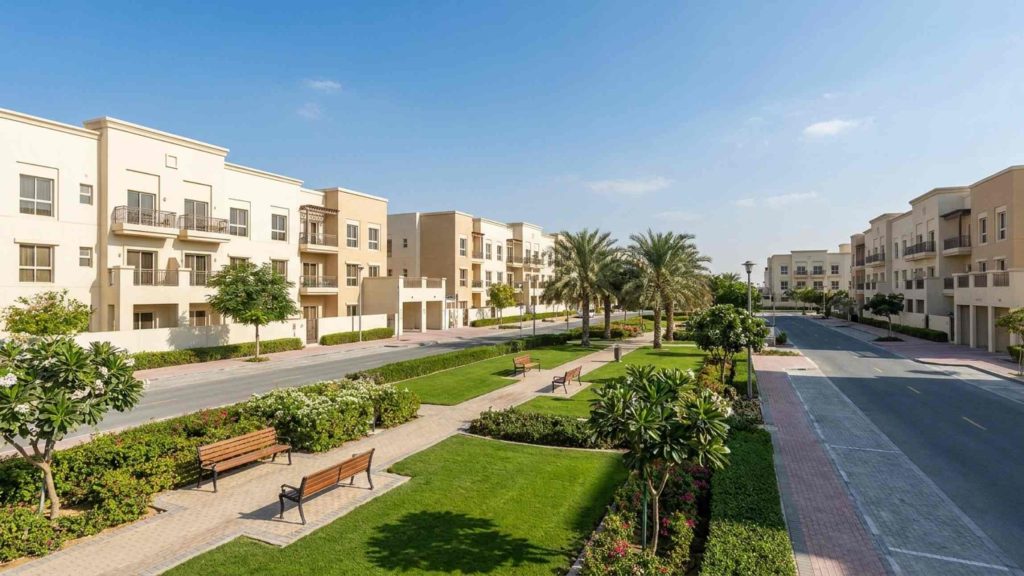
JVC delivers 7.5-9% gross rental yield, the highest among established Dubai areas, followed by Arjan/DLRC at 7.5-8.5% and Business Bay at 6.5-7%.
Jumeirah Village Circle (JVC) is the mid-market rental engine of Dubai. Entry prices around AED 1,350-1,500 per sq ft keep the buy-in low, while consistent demand from young professionals and small families keeps occupancy high. Service charges here run AED 12-18 per sq ft, among the lowest in Dubai, which protects your net yield after costs.
Business Bay pulls corporate tenants working in DIFC and Downtown, giving it steady 6.5-7% yields on apartments priced AED 1,780-2,050 per sq ft. It’s centrally located, which matters more to tenants than it does to buyers chasing capital growth.
Arjan and Dubai Land Residence Complex (DLRC) are the emerging high-yield plays, often overlooked because they’re newer and less glamorous, but they post yields comparable to JVC with room for the area to mature further.
Damac Hills 2 is Dubai’s clearest budget-villa ROI story. Entry prices around AED 900-1,200 per sq ft for townhouses and villas put it below almost every other area on this list, while yields of 6.5-8% keep the cash flow strong relative to the buy-in. It’s a good fit for buyers who want a villa, not just an apartment, without Arabian Ranches or Dubai Hills pricing.
Dubai Marina sits in the middle at 5.5-6.5% yield. It’s a safer, more established bet, just not the top yield performer anymore as newer mid-market areas have caught up.
Gross yield and net yield are not the same number. A JVC apartment at 8% gross yield with AED 15/sq ft service charges nets meaningfully more cash flow than a Palm Jumeirah unit at 5% gross with AED 30+/sq ft charges, even before you factor in the price difference.
If cash flow isn’t your priority and you’re chasing long-term price appreciation instead, here’s where that money has actually been moving.
Which Areas Have the Strongest Capital Appreciation?
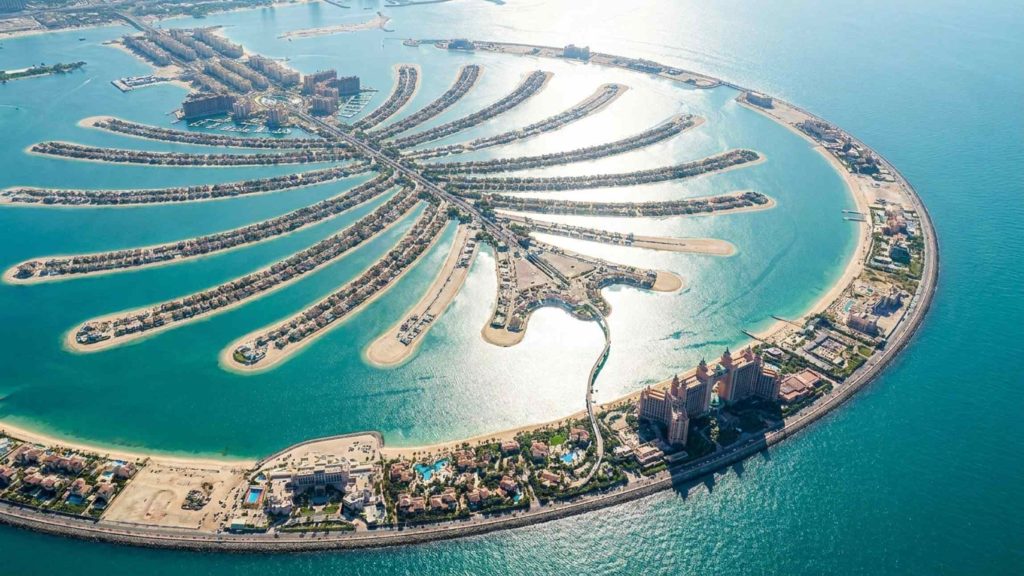
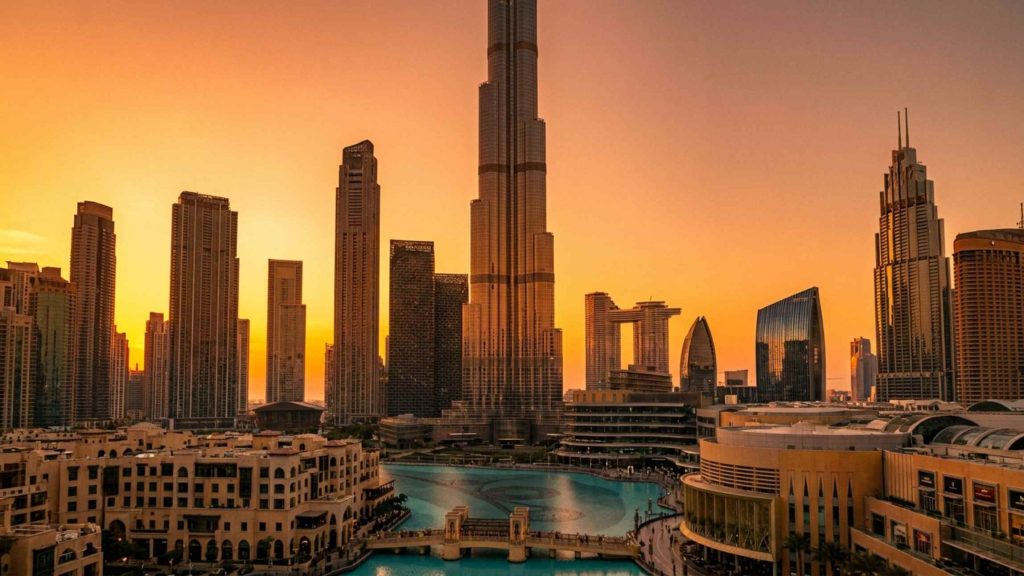
Palm Jumeirah leads Dubai’s price growth at 15-18% year over year, followed by Downtown Dubai at 12-14% and Dubai Hills Estate at 12-13%.
Palm Jumeirah remains Dubai’s clearest capital appreciation story, with villas trading at AED 4,200-5,500 per sq ft and apartments at AED 2,600-3,500 per sq ft. Limited land supply on the Palm keeps upward pressure on prices, but the tradeoff is a 4.0-5.5% rental yield, the lowest of any major area, and service charges that regularly exceed AED 30 per sq ft.
Downtown Dubai trades on Burj Khalifa and Dubai Mall proximity, holding 12-14% YoY growth at AED 2,850-3,450 per sq ft. It’s Dubai’s most internationally recognized address, which supports resale demand even in softer market cycles.
Dubai Hills Estate combines family-friendly villas with genuine growth, up 12-13% YoY at AED 1,800-2,432 per sq ft. Its golf course, parks, and community amenities put it closer to a self-contained town than a typical apartment district, and it’s newer than Downtown or Marina, so there’s still room to run before it fully matures.
Dubai Creek Harbour, still emerging, is where investors are placing longer-term bets on Dubai’s next skyline, though transaction volume there remains thinner than in established areas.
If capital growth is the goal, buying above a certain price threshold also unlocks a benefit worth knowing about: UAE residency through property ownership.
Property purchases of AED 2 million or more can qualify buyers for the UAE Golden Visa, a 10-year renewable residency. This applies across freehold areas, including Downtown, Marina, Palm Jumeirah, and Dubai Hills Estate, and is a major draw for international investors, not just UAE nationals.
Freehold vs leasehold status matters here too, and it’s a gap most “best areas” lists never mention. Not every part of Dubai allows foreign ownership. The next section explains exactly which zones do.
What Are the Best Family-Friendly Communities in Dubai?
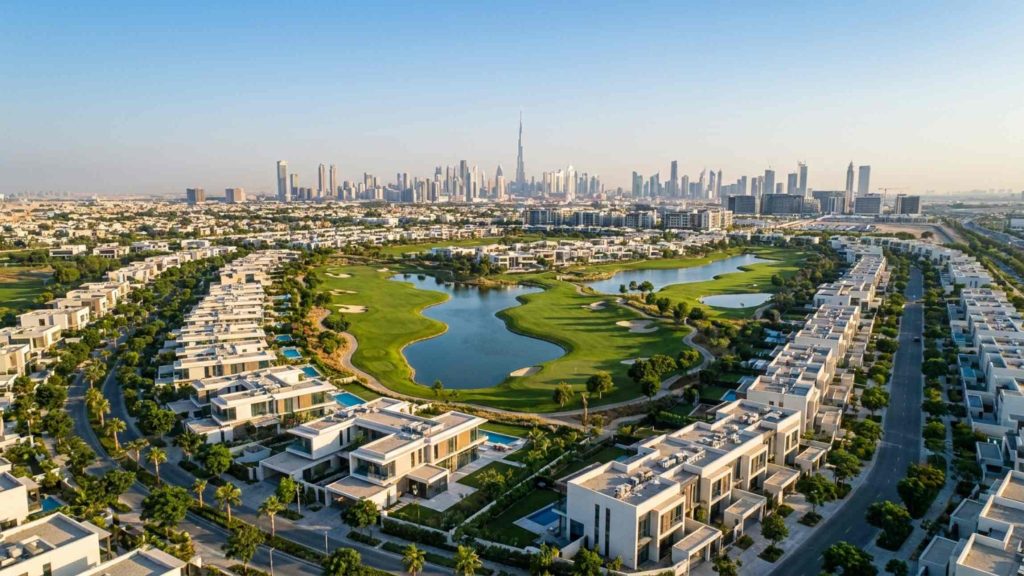
Dubai Hills Estate and Arabian Ranches lead Dubai’s family villa market, both offering schools, parks, and community amenities that apartment-heavy areas like Business Bay or Marina simply don’t have.
Dubai Hills Estate pairs villas and townhouses with a championship golf course, retail centers, and top-rated schools, all within a single master-planned community. The real estate market here has matured fast enough that resale demand for family-sized villas stays strong.
Arabian Ranches takes a quieter, more suburban approach, with gated villa clusters, community pools, and mature landscaping that appeal to families prioritizing space over central location. Its amenities lean toward calm, established living rather than the nightlife and dining scene you’d find in Marina or Downtown.
Damac Hills 2 is worth a look here too, since its lower entry price around AED 900-1,200 per sq ft makes a family villa achievable on a smaller budget, though the amenity level and finish quality are more modest than Dubai Hills or Arabian Ranches.
All three trade some rental yield for lifestyle amenity, which makes sense if you’re buying to live in Dubai property rather than purely to invest.
Can Foreigners Buy Freehold Property in Every Area of Dubai?
No. Only 60+ designated zones allow foreign freehold ownership under Law No. 7 of 2006 and Regulation No. 3 of 2006. Buying outside these zones means leasehold or restricted ownership rights, not full freehold title.
This is the single most common misconception among first-time Dubai buyers, and it’s one that almost none of the top-ranking articles bother to correct clearly. Designated freehold zones under Law No. 7 of 2006 include Dubai Marina, Downtown Dubai, JVC, Palm Jumeirah, Business Bay, Dubai Hills Estate, and Dubai South, among others.
Areas like older parts of Deira or Jumeirah 1 are not freehold for non-GCC nationals. If an area isn’t on the official freehold list, foreign buyers cannot hold full title, no matter how good the deal looks.
Before you commit to any area, verify freehold status through the Dubai Land Department’s official records, not through a broker’s word alone. This single check prevents the most expensive mistake a foreign buyer can make in Dubai.
With ownership rights confirmed, the next question is how much of that purchase price you’ll actually need to finance yourself.
How Does Your Mortgage Eligibility Change by Area and Buyer Type?
UAE nationals qualify for up to 85% LTV, first-time expat buyers up to 80% LTV, off-plan purchases cap at 60% LTV for everyone, and non-residents typically get 60-65% LTV.
This is where “best area” and “affordable area” often diverge, and it’s the section every competing article skips entirely. These caps follow CBUAE’s mortgage loan regulations, which set maximum LTV by buyer type and property status.
| Buyer Profile | Max LTV | Min. Down Payment | Notes |
|---|---|---|---|
| UAE Nationals | Up to 85% | From 15% | Highest LTV available, all mortgage categories |
| Expat Residents (first purchase, ≤AED 5M) | Up to 80% | From 20% | Salaried, min. AED 10,000/month |
| Expat Residents (second purchase) | Up to 75% | From 25% | Applies to subsequent property |
| Self-Employed Residents | Up to 75% | From 25% | Min. 1 year trade license |
| Off-Plan (any buyer) | Up to 60% | From 40% | Applies regardless of residency status |
| Non-Residents | 60-65% | From 35% | Max tenor 25 years, min. balance AED 45,000 |
At CityMortgage, we work with 25+ UAE bank partners across both conventional and Islamic (Sharia-compliant) financing options, and current indicative starting rates are around 3.75% for residents and 4.24% for non-residents, fixed for 1-5 years before reverting to a variable rate tied to EIBOR plus margin.
As of mid-2026, 3-month EIBOR sits close to 3.9%, which directly affects what your rate looks like once any fixed period ends. Buyers weighing residential mortgage options in more detail can see full eligibility criteria on our residential mortgage page, while non-resident investors should review our dedicated non-resident mortgage eligibility breakdown before shortlisting an area.
One pattern we see often is self-employed expat buyers assuming their business income alone qualifies them for the same 80% LTV as salaried applicants. In practice, self-employed applicants typically cap at 75% LTV and need at least one year of trade license history plus company bank statements. We flag this during the free eligibility assessment, before a client makes an offer they can’t finance.
This means the practical “best area” for a non-resident investor with 35% cash available looks very different from the best area for a UAE national with 85% LTV access, even if both are looking at the exact same square footage. Your ROI on any Dubai property purchase starts with what you can actually finance, not just what the listing price says.
Financing eligibility is only half the cost picture, though. The other half is what you pay on top of the purchase price.
What Are the Hidden Costs of Buying Property in Dubai?
Beyond the 4% DLD transfer fee, buyers pay a 0.25% mortgage registration fee, an AED 4,200-plus trustee fee, and service charges that range from AED 12 per sq ft in JVC to AED 30-plus per sq ft in Palm Jumeirah.
Here's the full breakdown most listings never show you upfront, based on current DLD fee schedules:
| Cost | Amount |
|---|---|
| DLD transfer fee | 4% of purchase price |
| Mortgage registration fee | 0.25% of loan amount + AED 290 admin |
| Trustee fee | AED 4,200+ (properties over AED 500,000) + VAT |
| Property valuation | AED 2,500-3,500 |
| Bank processing fee | Approximately 1% of loan amount |
| Agent commission | Approximately 2% of purchase price |
Add it up, and total closing costs typically land around 6-7% of the purchase price, not the 4% most buyers budget for based on the DLD fee alone.
Service charges also swing your real return significantly. A Palm Jumeirah apartment charging AED 30+ per sq ft against a JVC apartment at AED 15 per sq ft can erase several percentage points of net yield, even when the gross rental figures look similar on paper. Always ask for the exact service charge before comparing "yield" across two different areas, since gross yield figures rarely account for it.
Understanding your true costs is only useful if you also avoid the assumptions that trip up most buyers. Here are the ones we see most often.
What Common Mistakes Do Property Buyers Make When Choosing an Area?
Six misconceptions come up again and again with buyers we work with, and correcting them early saves real money.
"All areas in Dubai are freehold." Only the 60+ designated zones allow full foreign ownership. Verify before you commit.
"Price per square foot is the only metric that matters." Service charges vary by more than double between areas. A cheaper price per sq ft with high service charges can cost more monthly than a pricier unit with low charges.
"Off-plan property can't be mortgaged." It can, but it's capped at 60% LTV for every buyer type, so you need more cash upfront than you might expect.
"Non-residents are restricted to specific areas." Non-residents can buy in the same freehold zones as residents. What differs is the financing terms, specifically the 60-65% LTV cap, not the areas available to them.
"Rental yield is roughly the same everywhere." Yields range from around 4% in Palm Jumeirah to 8-9% in JVC. Luxury areas trade yield for capital growth; mid-market areas do the opposite.
"The DLD fee is the only real closing cost." As shown above, total closing costs run closer to 6-7% once you include trustee fees, registration, and processing charges.
FAQ
What is the minimum budget to buy property in Dubai in 2026?
Entry-level apartments in JVC, Arjan, and Dubai South start around AED 600,000-800,000. Areas like Downtown and Marina typically require AED 1.5 million or more for a comparable unit, and Palm Jumeirah entry points start closer to AED 2.5-3 million.
How much down payment do I need as an expat buyer?
Expat residents buying their first property under AED 5 million typically need a minimum 20% down payment, giving access to up to 80% LTV. Off-plan purchases require at least 40% down regardless of residency status, since LTV caps at 60% for all buyers on off-plan.
Is Palm Jumeirah a better investment than Dubai Hills Estate?
It depends on your goal. Palm Jumeirah has stronger capital appreciation (15-18% YoY) but lower rental yield (4-5.5%) and higher service charges. Dubai Hills Estate offers more balanced growth (12-13% YoY) with better yield (5.5-6%) and lower running costs, making it stronger for buyers who want both income and growth.
Can I get a mortgage for off-plan property in Dubai?
Yes, but LTV caps at 60% for off-plan purchases regardless of your residency status, meaning you need at least 40% of the purchase price in cash or staged payments.
What's the difference between freehold and leasehold in Dubai?
Freehold ownership gives foreign buyers full title to the property, available only in the 60+ designated zones under Law No. 7 of 2006. Leasehold typically grants long-term use rights, often up to 99 years, without full ownership, and applies outside the designated freehold zones.
Does buying property in Dubai qualify me for a Golden Visa?
Yes. Purchasing property worth AED 2 million or more, across most freehold areas, qualifies buyers for a 10-year renewable UAE Golden Visa, regardless of nationality.
Which Area Fits Your 2026 Buying Strategy?
If cash flow is your priority, JVC and Business Bay deliver the strongest yields with lower entry costs. If you're playing the long game on capital growth, Palm Jumeirah, Downtown Dubai, and Dubai Hills Estate have the track record. If you're buying to live, Dubai Hills Estate and Arabian Ranches combine schools, villas, and community life.
None of that matters, though, until you know exactly what you can finance. Your mortgage eligibility, not the area's popularity, should be the first thing you check.
Ready to Get Your Free UAE Mortgage Assessment?
Before you make an offer on any area in this guide, find out exactly what LTV, down payment, and rate you actually qualify for. Get your free eligibility assessment today.
WhatsApp CityMortgage now at +971 56 130 5656 for a free, same-day eligibility assessment. We compare 25+ UAE lenders and find the right mortgage for your profile, with full transparency and zero obligation.
Disclaimer
The information in this article is provided for general guidance only and reflects market conditions, regulatory rules, and indicative rates as of the date of publication. Mortgage eligibility criteria, LTV ratios, interest rates, DLD fees, and lender policies can change without notice and vary by individual profile, property, and bank assessment.
Nothing in this article constitutes financial, legal, or mortgage advice. CityMortgage recommends you obtain a personalised assessment before making any property finance decision.
For the most current figures and eligibility requirements, please refer to the Central Bank of the UAE (CBUAE), Dubai Land Department (DLD), and your chosen lender directly — or speak to a licensed mortgage advisor.
City Axis Mortgage Broker L.L.C. is a RERA-licensed mortgage broker (ORN: 58708). Full terms available at citymortgage.ae/terms-conditions.
